
Ask a San Diego contractor why a quote came in higher than last year’s version of the same project, and the honest answer increasingly has nothing to do with San Diego at all. It’s sitting in a shipping container somewhere, subject to a tariff that didn’t exist two years ago.
What’s Actually Driving the Cost
The National Association of Home Builders has been tracking the effect closely, since building materials are one of the association’s core advocacy issues. A 50% Section 232 tariff on steel and aluminum imports remains in effect, alongside tariffs on softwood lumber, kitchen cabinetry, and a range of other building materials.
Steel and aluminum aren’t abstract line items for a backyard project. They’re rebar in a poured footing, the frame of a pergola, fasteners and fixtures throughout a patio cover installation, and the structural bones of a fire feature. When the base cost of those materials jumps by half, that increase moves through the supply chain to whoever’s paying for the finished structure.
Why This Shows Up Differently in Outdoor Projects Than Indoor Ones
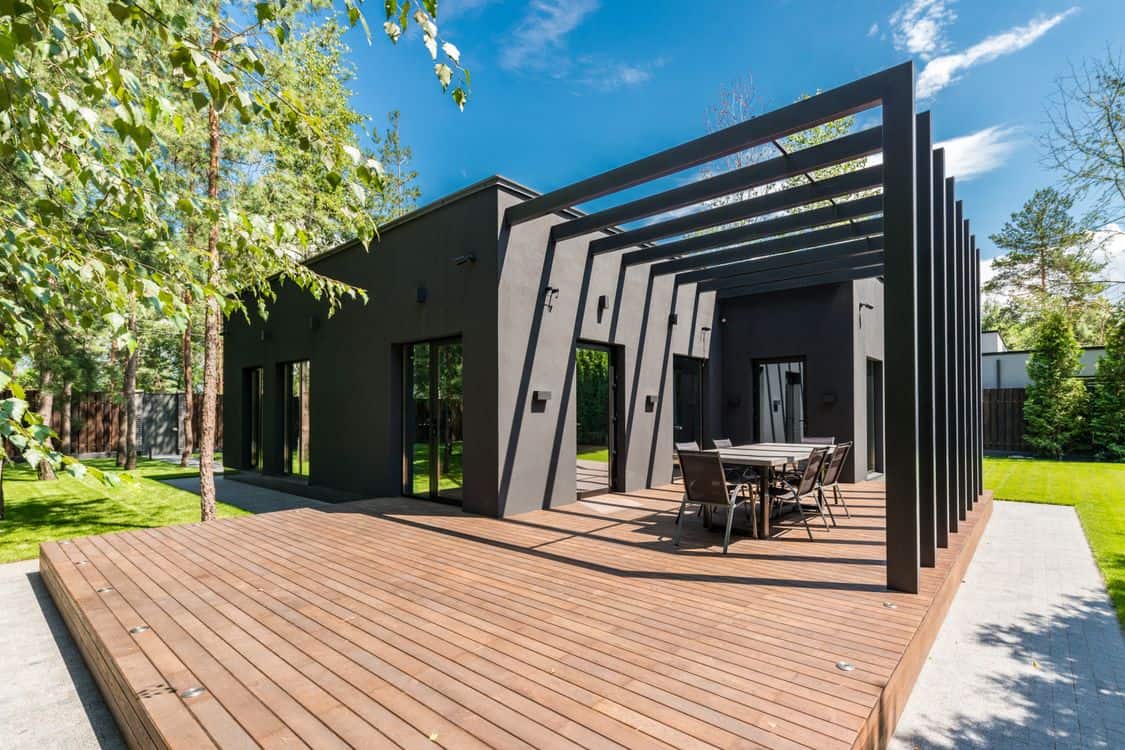
Interior remodels lean heavily on materials less exposed to these specific tariffs: drywall, paint, cabinetry finishes, tile. Outdoor construction leans harder on exactly the categories getting hit hardest. Metal pergola and patio cover framing, aluminum fencing, and steel reinforcement for retaining walls and foundations all sit squarely inside the tariffed categories.
That’s part of why some homeowners planning backyard work are seeing sharper cost increases than they expected based on general inflation numbers. Builders surveyed by NAHB have reported a typical added cost per home in the thousands of dollars tied specifically to tariff actions, and outdoor construction, with its heavier reliance on metal framing and reinforcement, doesn’t get the same partial insulation that an all-drywall interior project does.
What This Means for Timing a Project
None of this is unique to San Diego. It’s a national pricing shift showing up in every market simultaneously, which is precisely why it can be confusing locally: a homeowner comparing this year’s quote to a neighbor’s project from two years ago is often looking at genuinely different input costs, not a contractor padding the estimate.
“We’re locking in material pricing with suppliers earlier than we used to, sometimes months before a project actually breaks ground, because waiting means eating whatever the next tariff adjustment does to steel and aluminum,” says Arc Design Landscape, a San Diego design-build firm. “Clients notice the difference between a quote that holds and one that creeps up mid-project, so a lot of that work now happens before the estimate ever gets written.”
Material sourcing strategy has become part of a good contractor’s job in a way it wasn’t a few years ago. For anyone planning a metal-heavy backyard structure, that upfront planning conversation is worth having before the project starts, not after the first quote comes in higher than expected.