
A wetter winter outlook is a good reason for Austin homeowners to do ordinary roof maintenance before the season turns more active. The checklist does not need to be framed as a new contractor campaign to be useful.
The priorities are familiar: drainage, flashing, roof penetrations, attic ventilation, and any damage left over from previous hail or wind events.
None of these maintenance steps is new. A wetter outlook simply gives homeowners a reason to move them earlier on the calendar instead of waiting for a leak to force the issue.
Timing is part of the pitch. A checklist completed in late September or October leaves a margin for follow-up repairs before the season’s first significant system arrives, whereas the same list attempted in December often turns into reactive patchwork instead of planned prevention. Scheduling also gets tighter as the season progresses, since crews handling emergency tarp-downs after the first storms have less availability for preventive work.
Why Gutter and Drainage Checks Are Moving to the Top of the List
The point is not that every strong El Niño winter produces the same Austin weather. It is that a wetter pattern gives small roof defects more chances to become visible.
During a strong El Niño, forecasters note the subtropical jet stream becomes stronger and more active across the southern United States, which tends to redirect more storm systems into Texas than a typical winter sees. Repeated wet-to-cold transitions put extra strain on any drainage system that isn’t already clear.
What to Check Before Repeated Rain Arrives
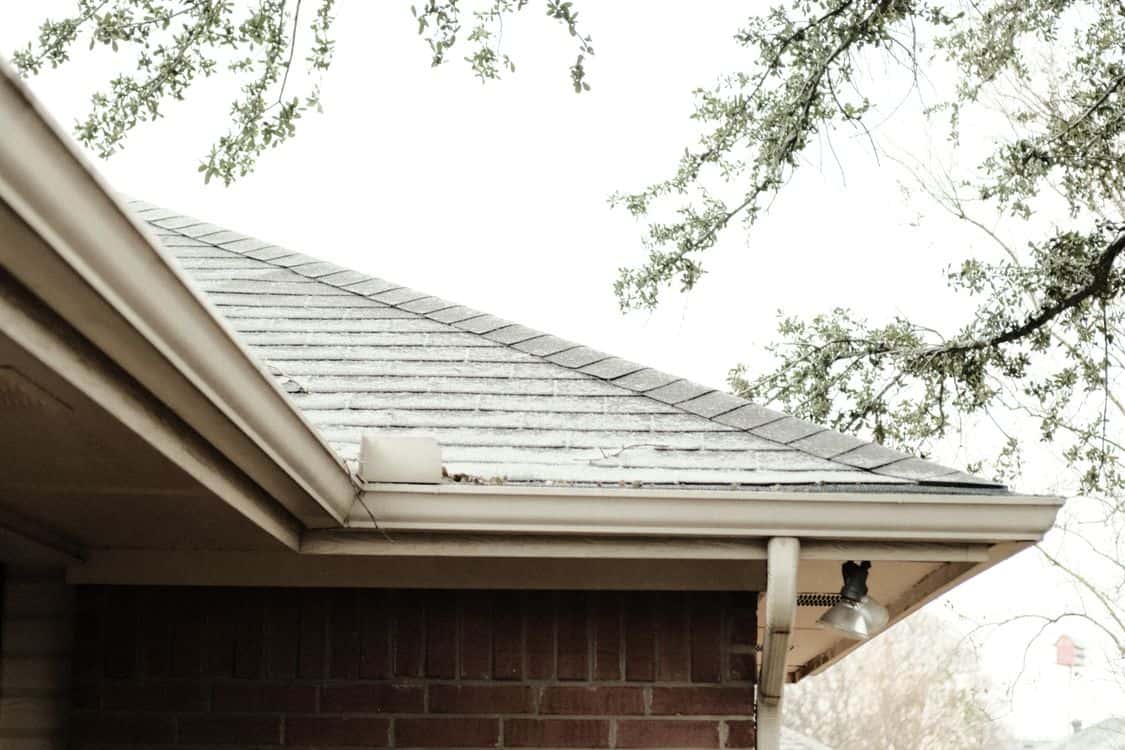
Start with gutters, downspouts, valleys, and other drainage paths that can be checked safely from the ground. Blocked drainage can turn ordinary rain into localized overflow and water intrusion.
Tree cover adds another layer to this in much of Austin and Westlake, where mature oak canopies drop leaves and debris well into November. A gutter cleared in October can still need a second pass before winter’s heaviest systems arrive, which is part of why some contractors are recommending two checks rather than one this year.
Flashing around chimneys, walls, vent pipes, and skylights deserves attention because these transition points are common leak locations regardless of the seasonal forecast.
Attic ventilation is worth checking too, but not because El Niño creates a special ventilation rule. Proper ventilation remains part of normal roof-system performance through both hot and cool seasons.
Flashing around chimneys, vent pipes, and skylights is typically the first place that kind of cycling exposes a weakness. Metal and sealant expand and contract at different rates than shingles, and repeated freeze-thaw stress accelerates any gap that’s already started to form. An Austin roofing company inspecting a home before winter can help identify flashing, drainage, or penetration problems that are easier to address before repeated rain arrives.
The goal is to enter winter without known weak points rather than trying to predict exactly which storm will expose them.
Sealant around pipe boots gets similar attention, since rubber boots are often the first component to crack under Central Texas’s swings between summer heat and the freeze-thaw cycling a wetter winter tends to bring.
Attic ventilation is worth checking as part of normal roof-system maintenance because poor airflow can contribute to moisture and heat problems below the roof deck. It is not a special El Niño requirement.
Why Contractors Are Recommending Documentation Before Storms Arrive, Not After
A less obvious item on this fall’s checklists is pre-storm documentation: photographing or recording the roof’s condition before the season’s active weather begins, not just after damage occurs.
The logic here is practical, not defensive. A dated record of a roof’s pre-winter condition gives homeowners and insurers a clear baseline if a claim becomes necessary later, and it can shorten disputes over whether damage is new or pre-existing.
Several contractors framing this year’s checklist point to the number of storm systems expected under an active southern track as the reason baseline documentation matters more than usual. More storm events mean more chances for cumulative, hard-to-date damage rather than one clearly attributable event.
Combined with the drainage and flashing checks, the documentation step rounds out a list that’s less about major repairs and more about reducing the number of small vulnerabilities a wetter-than-normal winter is likely to find.
Contractors this fall are steering away from any single dramatic fix. Instead they’re pushing a handful of small, verifiable steps, done before storm frequency picks up.