
Ice is the quiet villain of a Toronto winter. It does not arrive with the drama of a windstorm, but it loads roofs, jams gutters, and works its way under shingles in ways that show up months later as a leak nobody can explain. The late-March 2025 ice storm was a textbook example.
When the final accounting came in a year later, it put hard numbers behind what roofers already knew from the call volume: ice does an enormous amount of damage to the part of the house people pay the least attention to.
The cost, finalized a year later
Catastrophe modellers settled the insured loss from that storm at $466 million, ranking it the sixth-costliest weather event in Ontario’s history and the most expensive anywhere in Canada that year.
It brought down trees and power lines and flooded basements, but a large share of the quieter, slower-to-surface damage was to roofs, gutters, soffits, and the flashing details that ice exploits. Much of that did not announce itself until the spring thaw.
How ice actually damages a roof
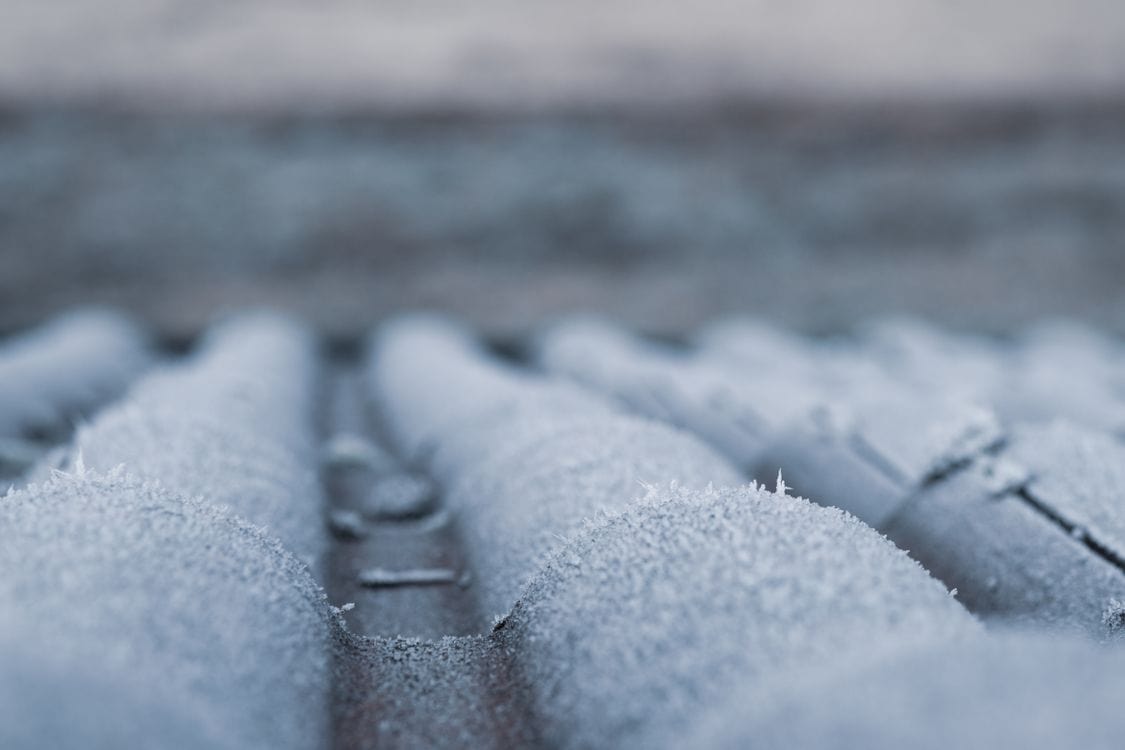
The central mechanism is the ice dam. Heat escaping from a poorly ventilated or under-insulated attic warms the upper roof deck and melts the snow sitting on it. That meltwater runs down to the cold overhang at the eave, where it refreezes into a ridge of ice.
As the dam grows, it traps the next round of meltwater behind it. With nowhere to drain, the water backs up under the shingles, past the point where shingles are designed to shed it, and finds its way through the deck and into the ceiling below. The roof did not “fail” in the storm so much as its ventilation and edge detailing failed to break a predictable cycle.
What separates a roof that survives
The roofs that come through an ice event intact share a few unglamorous traits. They have proper attic ventilation that keeps the deck cold and stops the melt-refreeze cycle from starting. They have ice-and-water shield, a self-sealing membrane, run well past the eave and into the valleys. And they have flashing installed with cold-climate behaviour in mind.
None of that is visible from the street, which is exactly why it gets skipped by crews competing only on price. The homeowner cannot see the difference at the curb, so a cheaper roof that omits the membrane and shortcuts the ventilation looks identical, until the first hard winter.
That invisibility is why the choice of installer carries so much weight here. The firms that build for the climate rather than the lowest bid are the ones with a track record to protect, and they are the difference between a roof detailed to survive an ice storm and one that merely looks the same from the street until the thaw.
The lesson of a record ice year
After a winter that produced Ontario’s sixth-costliest weather event, the durable conclusion is that ice resistance is built into a roof, not added to it later. Ventilation, membrane coverage, and edge detailing are decisions made on installation day, and they are nearly impossible to retrofit cheaply.
For a Toronto homeowner, that reframes a re-roof as a chance to fix the ice vulnerability for the next twenty years, not just to swap shingles. The roofs that leaked in March 2025 mostly leaked at details a careful crew would have handled. The detailing under the shingles is what separates a roof that lasts from one that floods.